
Now On: 8 August - 8 September 2026
画展: 古迹•村居
Exhibition: Where Time Dwells
Chen Shi Jin Gallery, Bras Basah, #02-05
陈士仅画展 | 百胜楼 #02-05
Chen Shi Jin Art GalleryTraditional Chinese ink painting with a Southeast Asian heart. A welcoming space for all to appreciate tradition rooted in our own soil.
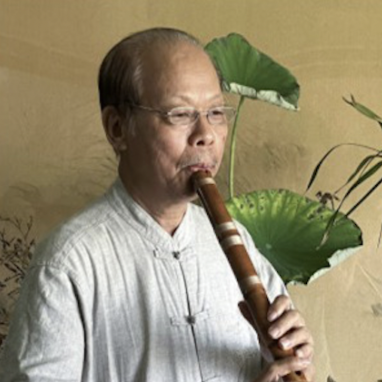
Chen Shi Jin 陈士仅
Singaporean ink artist Chen Shi Jin has long been dedicated to creating works based on life-from-nature sketches, using traditional Chinese painting techniques to capture the customs and landscapes of Southeast Asia; his works exude the rustic charm of the Nanyang region.
After graduating from the Nanyang Academy of Fine Arts (NAFA), he became the first Singaporean to study at the China Academy of Art. He later returned to NAFA as an adjunct professor for 21 years, dedicating himself to both art and education.
In 1985, he received the ASEAN Study Tour Prize from the Singapore Oriental Painting Group, followed by the UOB Best Painting Award in 1996. In May 2026, he opened a gallery at Bras Basah, where it invites all to appreciate the beauty of traditional ink through thematic exhibitions
陈士仅(Chen Shi Jin)是新加坡水墨画家。长期着重写生创作,加上以传统中国绘画技法记录东南亚风土人情,他的作品流淌着南洋土地上朴实的芬芳。
自南洋艺术学院毕业后,他是我国首位前往中国美术学院深造的留学生。陈氏过后也在南洋艺术学院兼职教画21年,持续投入艺术与教育工作。
1985年他曾获新加坡东方绘画组亚细安考察奖。1996年大华银行全场最佳画作奖。
2026年5月起,他于百胜楼设立画廊。画廊将陆续推出专题展览,内容多姿多彩,供各界人士欣赏传统水墨之美。
Artist’s Works
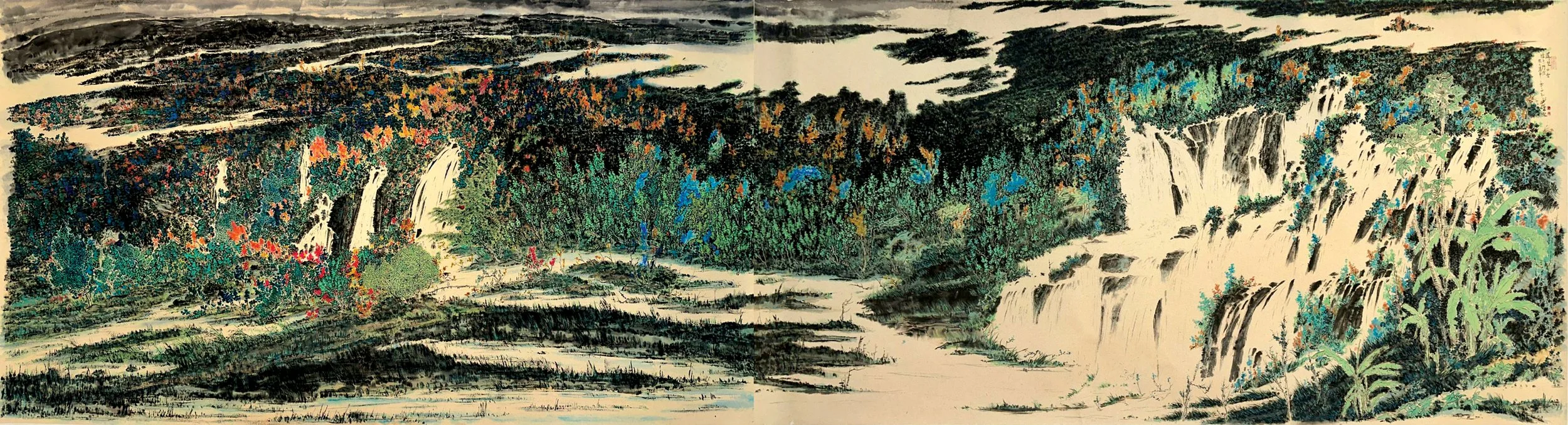
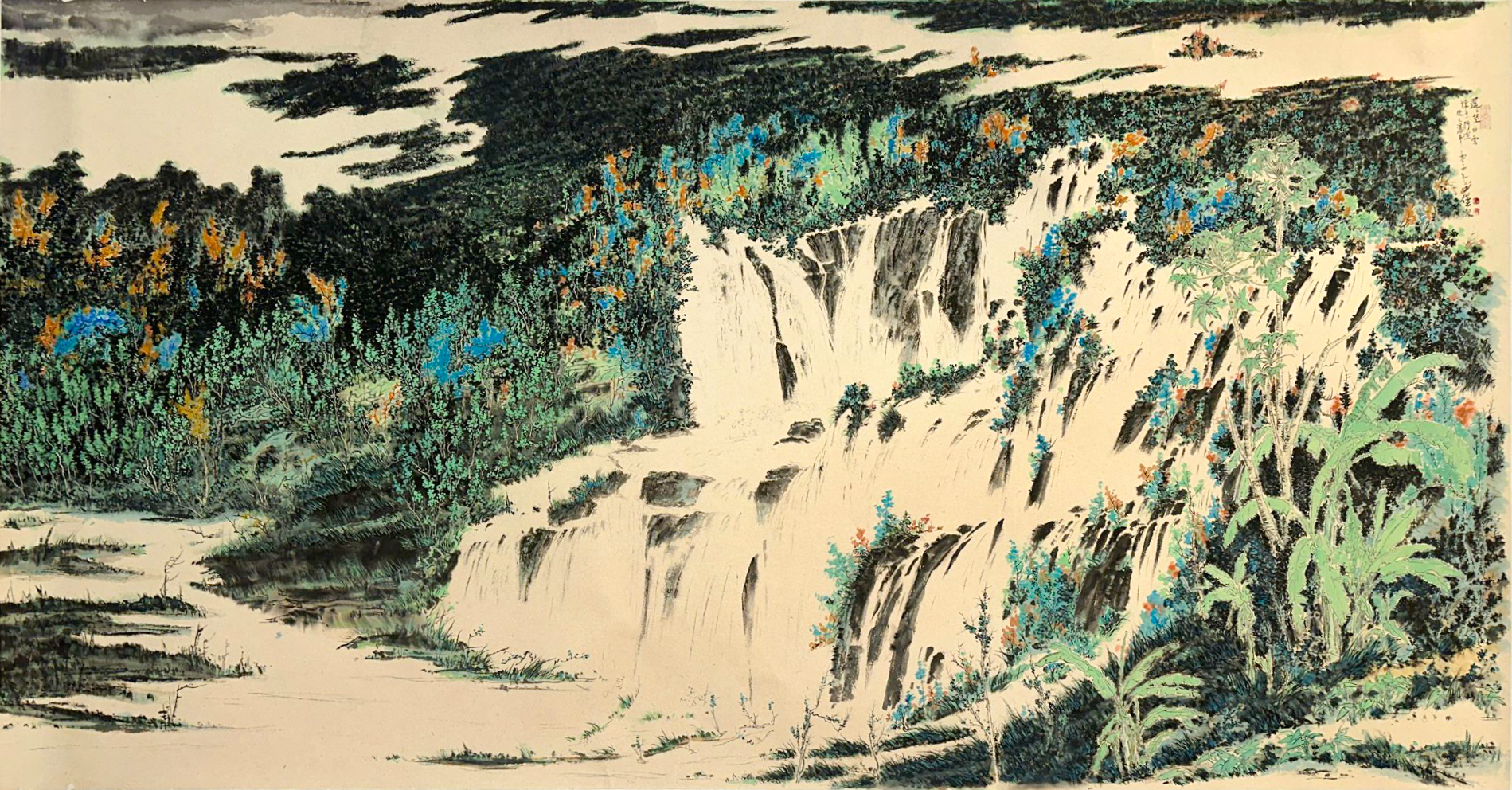
Year:2023
Medium: Ink on Rice Paper
Dimensions: 360×90cm
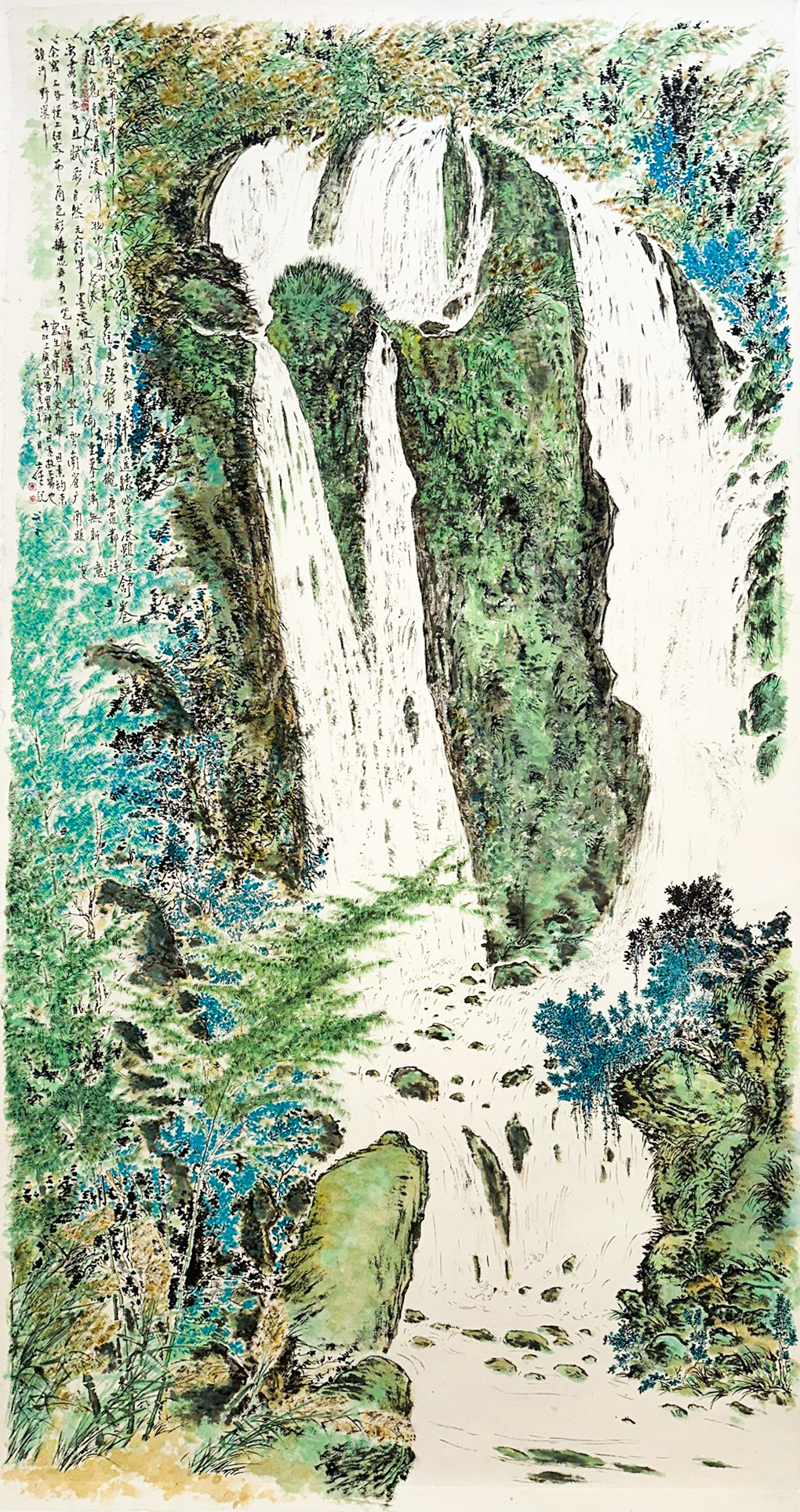
Detian Grand Waterfall《德天大瀑布》(2023) is the second of two paintings titled Detian Grand Waterfall, with exactly twelve years separating the two works.
Viewed side by side, the two paintings clearly reveal the slow yet steadfast trajectory of an artist’s transformation over the course of a long creative journey. The color palette has evolved from restrained to bold, and the brushwork has become increasingly rich and measured.
The artist has expanded the palette of the blue-green (qinglu 青綠) landscape tradition, painting the landscape with bolder and more varied tones. Bold brushwork and ink washes contrast this second rendition of Detian Waterfall with the delicate and refined style of the first painting.
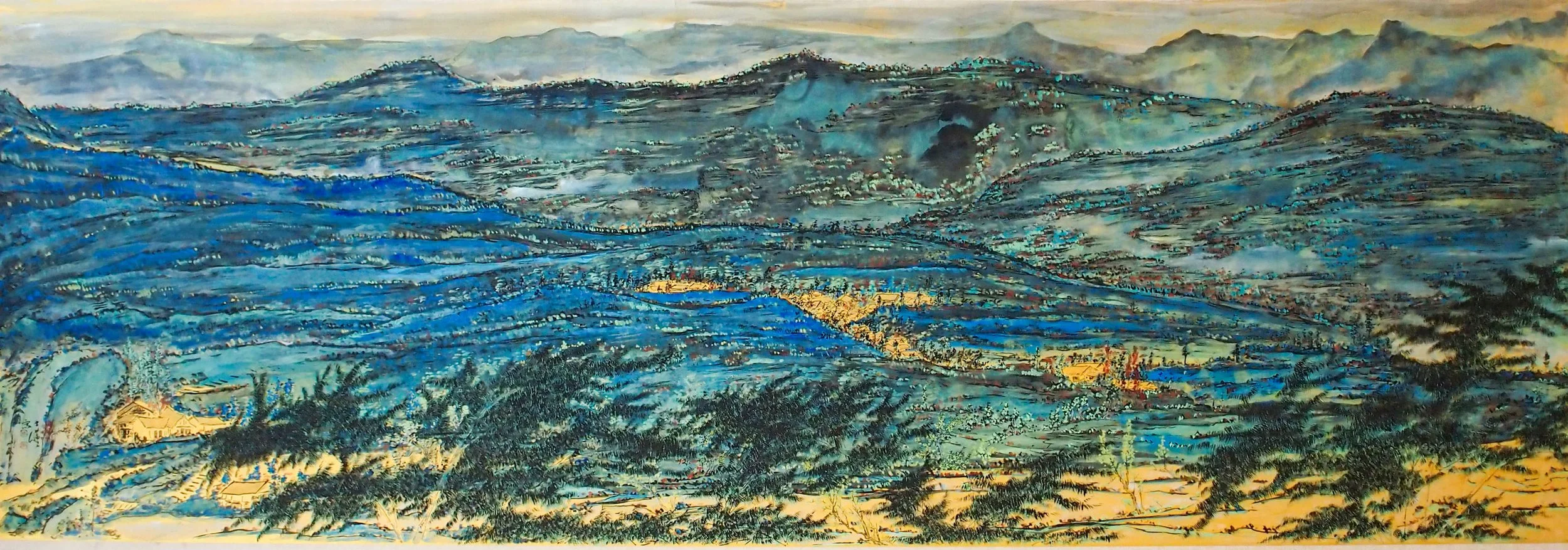
Medium: Ink on Rice Paper
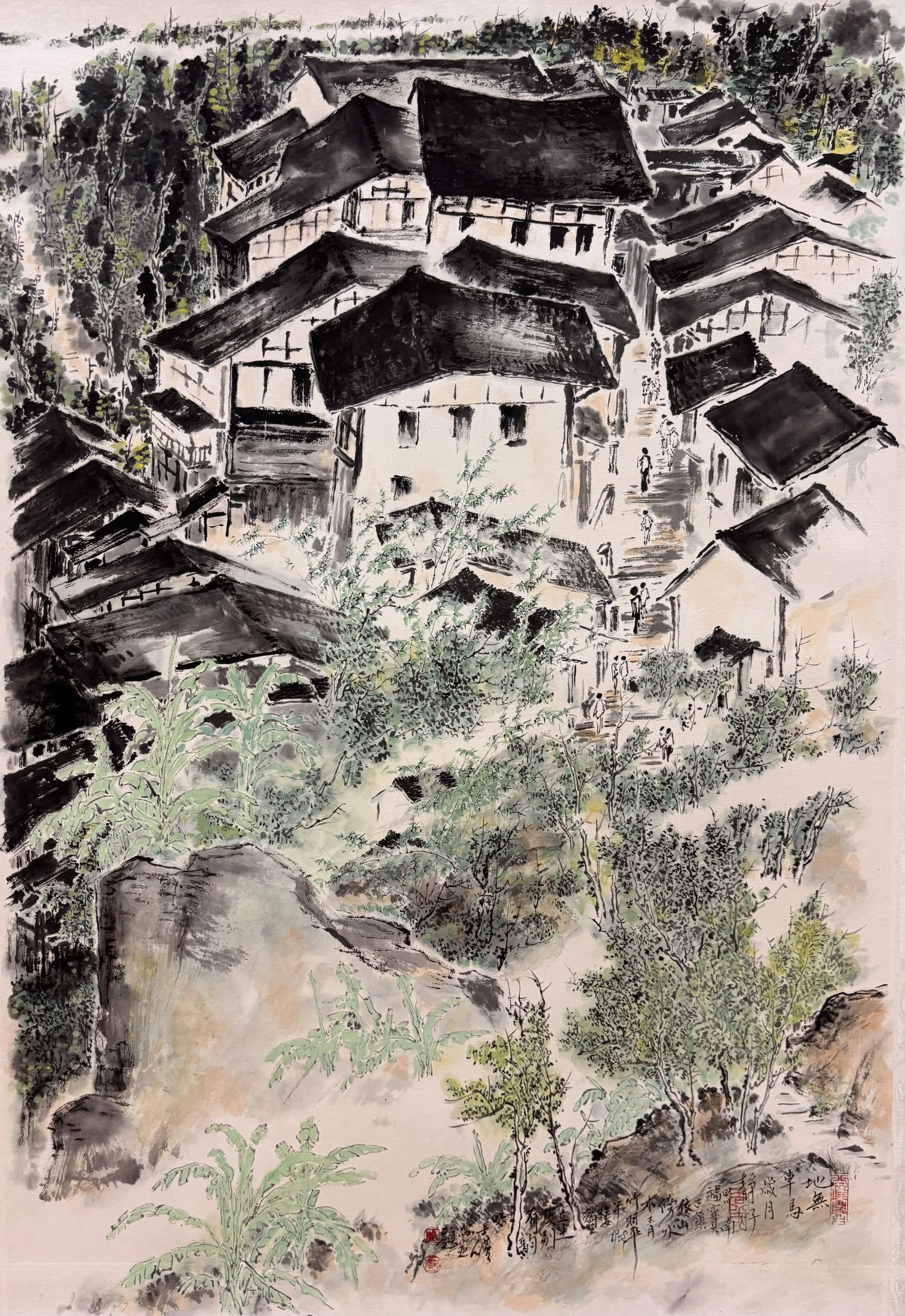
Dimensions: 58*170cm
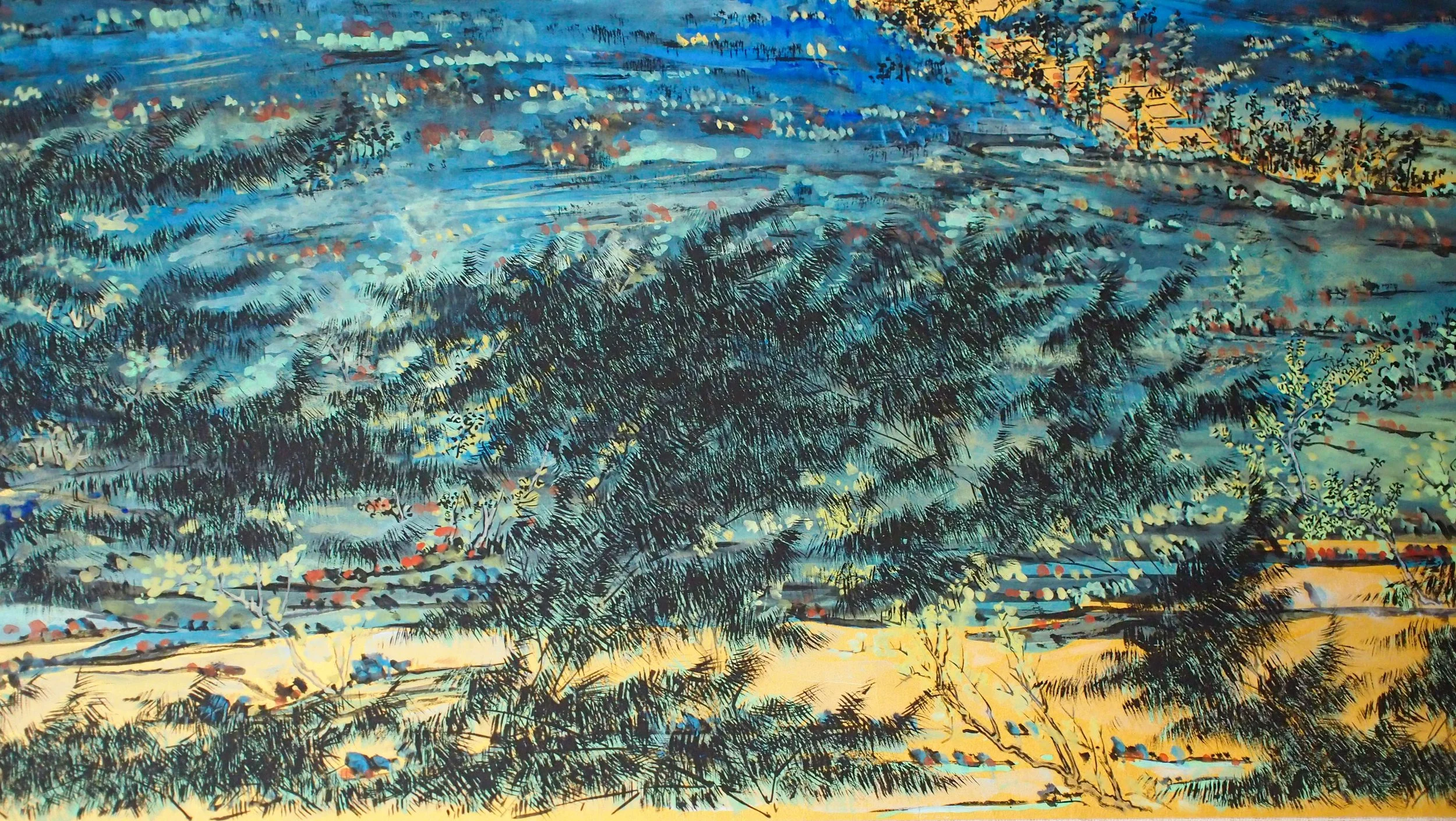
This painting of terraced fields employs two contrasting patterns—“heavy, light, heavy, light”—and was created through meticulous, time-honored sketching, lending the composition a thought-provoking quality. With tranquil brushstrokes, the golden rice paddies and dwellings, the interplay of green dots, lines, and planes, and the deep-green bamboo grove weave together to form a beautiful and profound landscape.
The deep blues and golden yellows recall the luminous palette of Van Gogh’s The Starry Night, with an almost Impressionist sensitivity to colour and light. Yet rendered in ink on rice paper, the familiar countryside takes on a distinctly Chinese ink character.
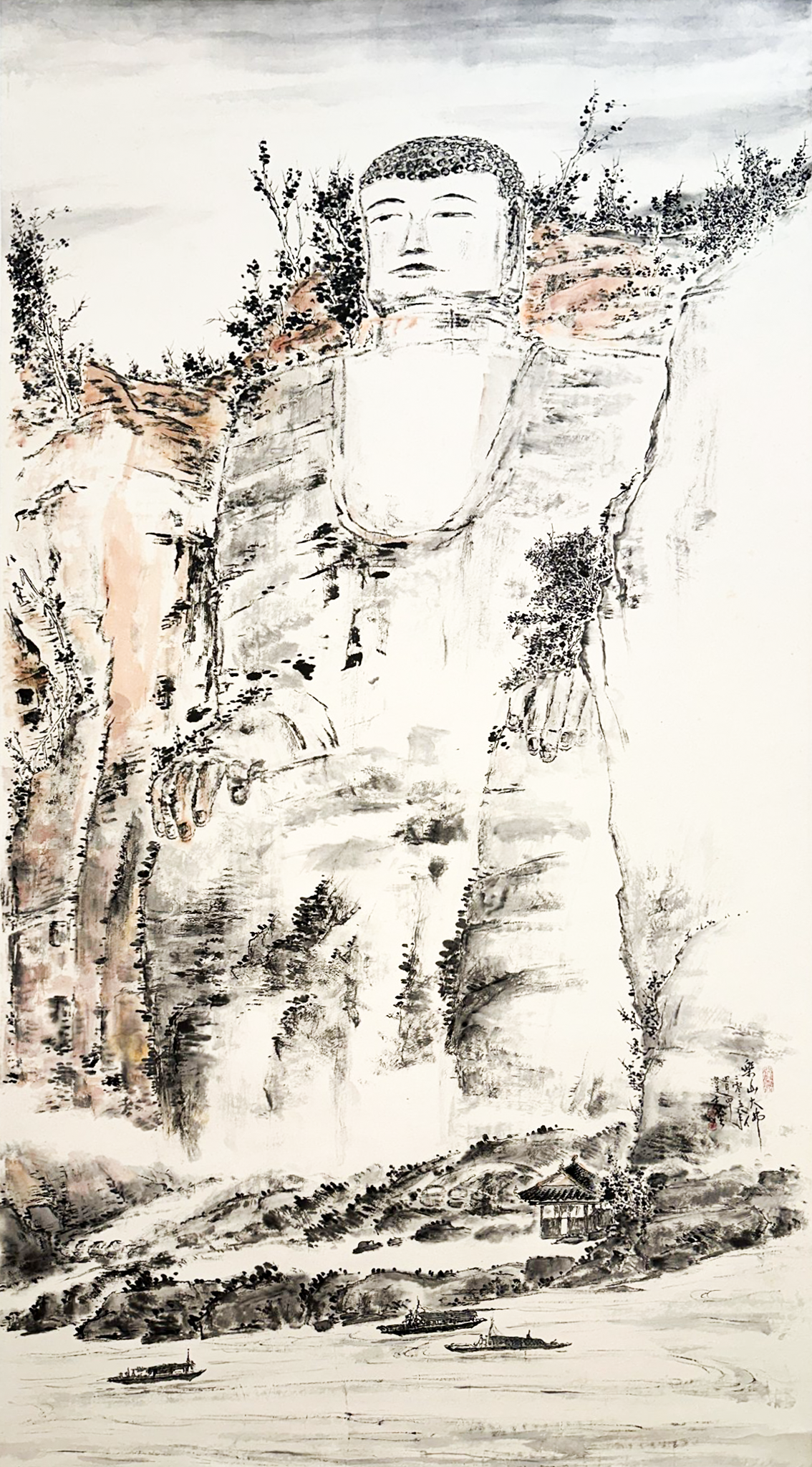
On the banks of the Min River stands the Leshan Giant Buddha, a magnificent stone carving dating back a thousand years. This work uses the white-line drawing technique to outline the seated statue of Maitreya Buddha, emphasizing its solemnity and grandeur; the mountains and forests behind it are artistically enhanced or simplified, making the composition appear more exaggerated and dynamic. The interplay of light and dark ink tones further enhances the overall artistic expressiveness.
岷江之畔,乐山大佛,乃一千年前之伟大石刻。此作以白描法勾勒弥勒佛坐像,突出其庄严雄伟;对其背后的山体与树林,则施以艺术之增减,使画面更显夸张而富张力。墨色之轻重交错,亦增强了整体的艺术表现力。
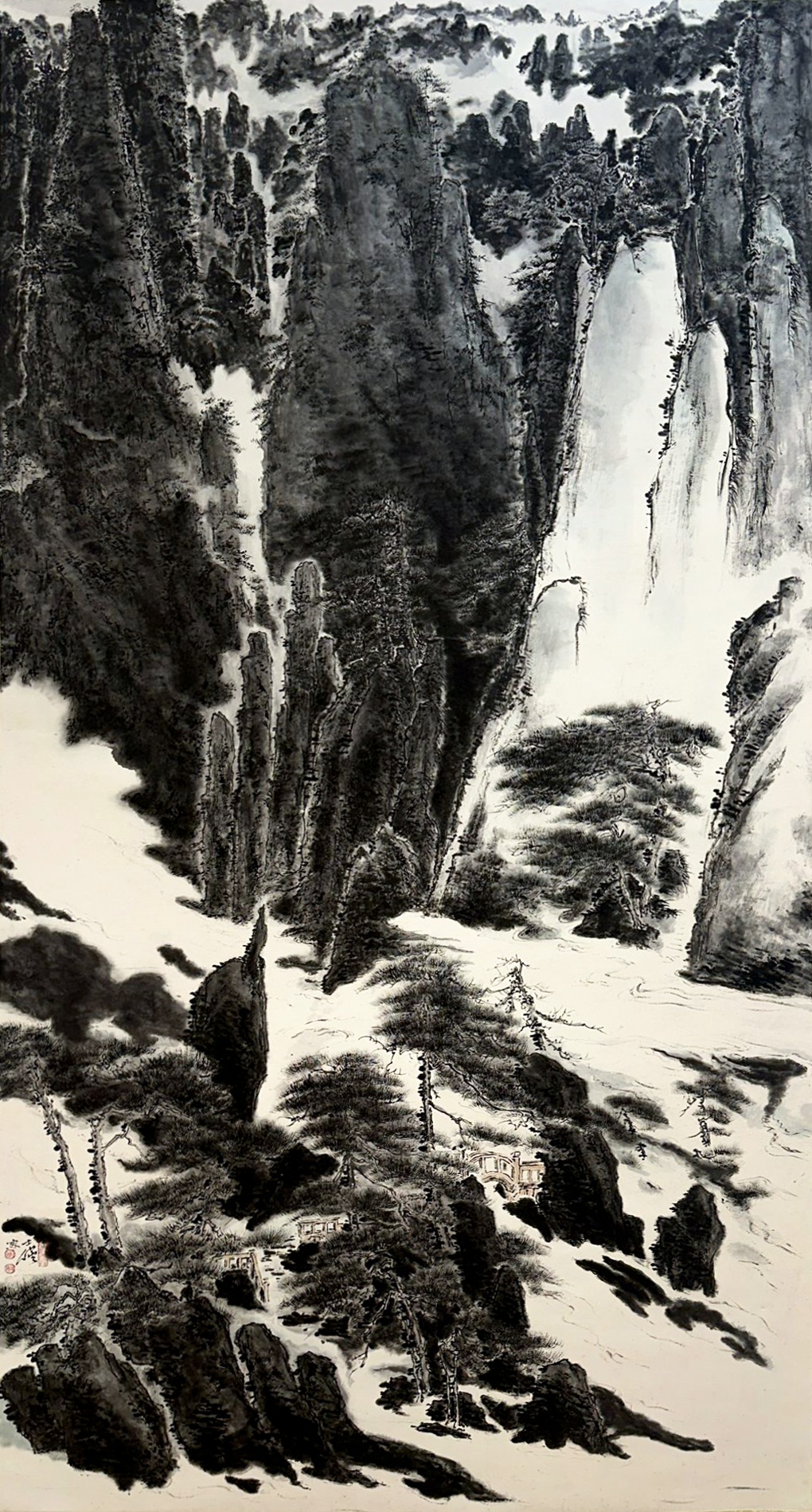
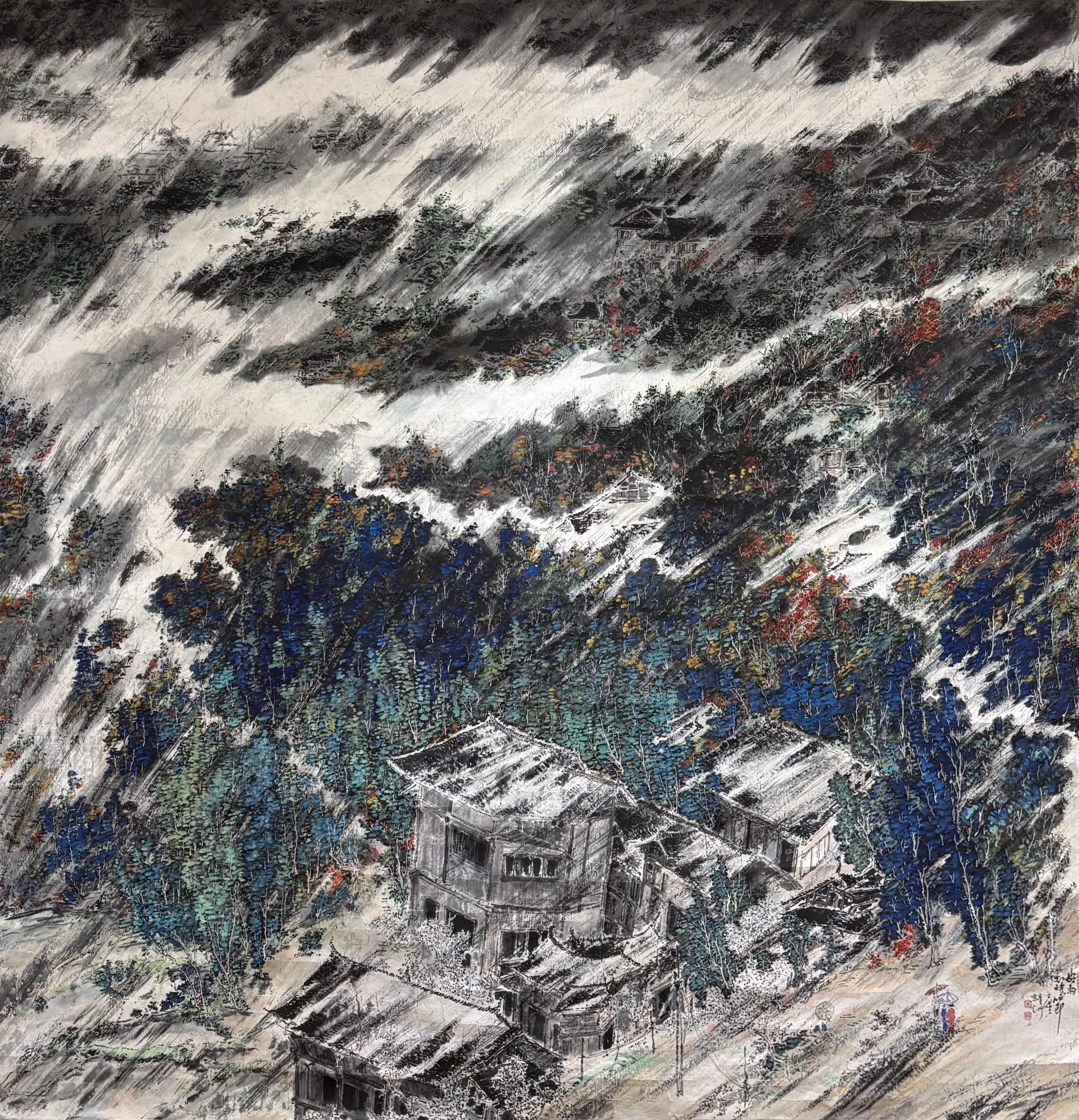
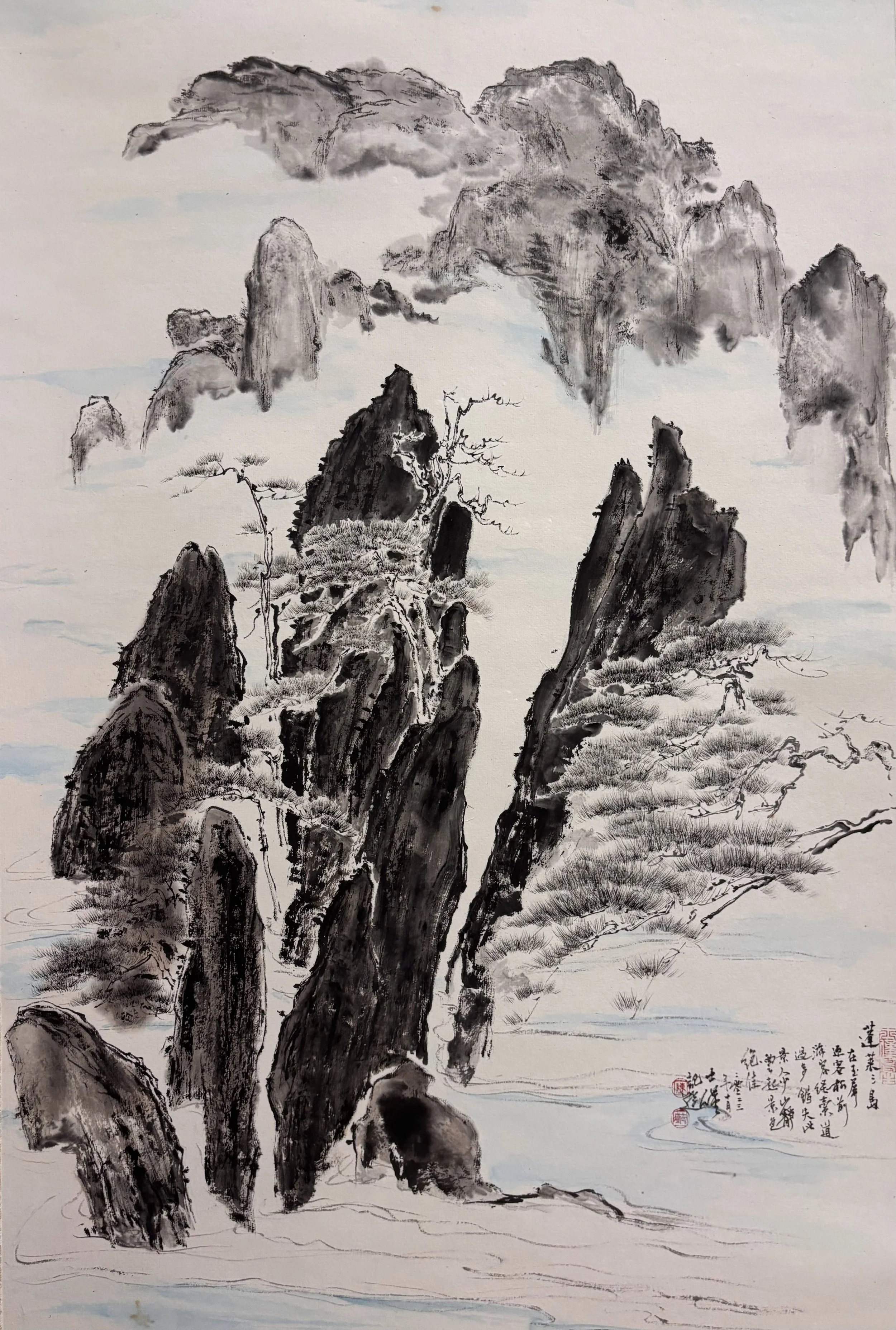
Huangshan is a collection of sketches of the mountain’s rocks and pine trees created during numerous on-site sessions. The artist lived on the mountain for more than forty days and climbed Huangshan eight times between 1982 and 2022. It was not until the past six years that he felt he had gained some insight.
This work creates a striking artistic tension by contrasting the “Black Mountain” with the “White Mountain.” Huangshan was historically known as “Yishan,” where “Yi” implies “darkness”; there was originally no concept of a “White Mountain.” However, to highlight the mountain forms and pine trees, the artist boldly painted the mountain white and used ink to create a backdrop, allowing the white mountain and white clouds to complement each other beautifully. In front of the cloud-shrouded mountains, a row of pine trees has been added as the foreground. This technique was developed through repeated experimentation following numerous failed attempts; looking back now, it stands as a relatively successful innovation.
《黄山》是山石与松树多次写生稿的合集。画家曾在山上住过四十余日,自1982年至2022年,先后登临黄山八次。直至近六年来,方觉略有心得。
此作以黑山、白山为对比,颇具艺术张力。黄山古名“黟山”,“黟”即黑多之意,本无“白山”之说。然为凸显山体与松树,画家大胆以白色绘山,复以墨色衬其后,使白山、白云相映成趣。云山之前,再添一行松树作为前景。此法乃经过多张失败之作后,反复摸索而出,今视之,当属较为成功的变法。
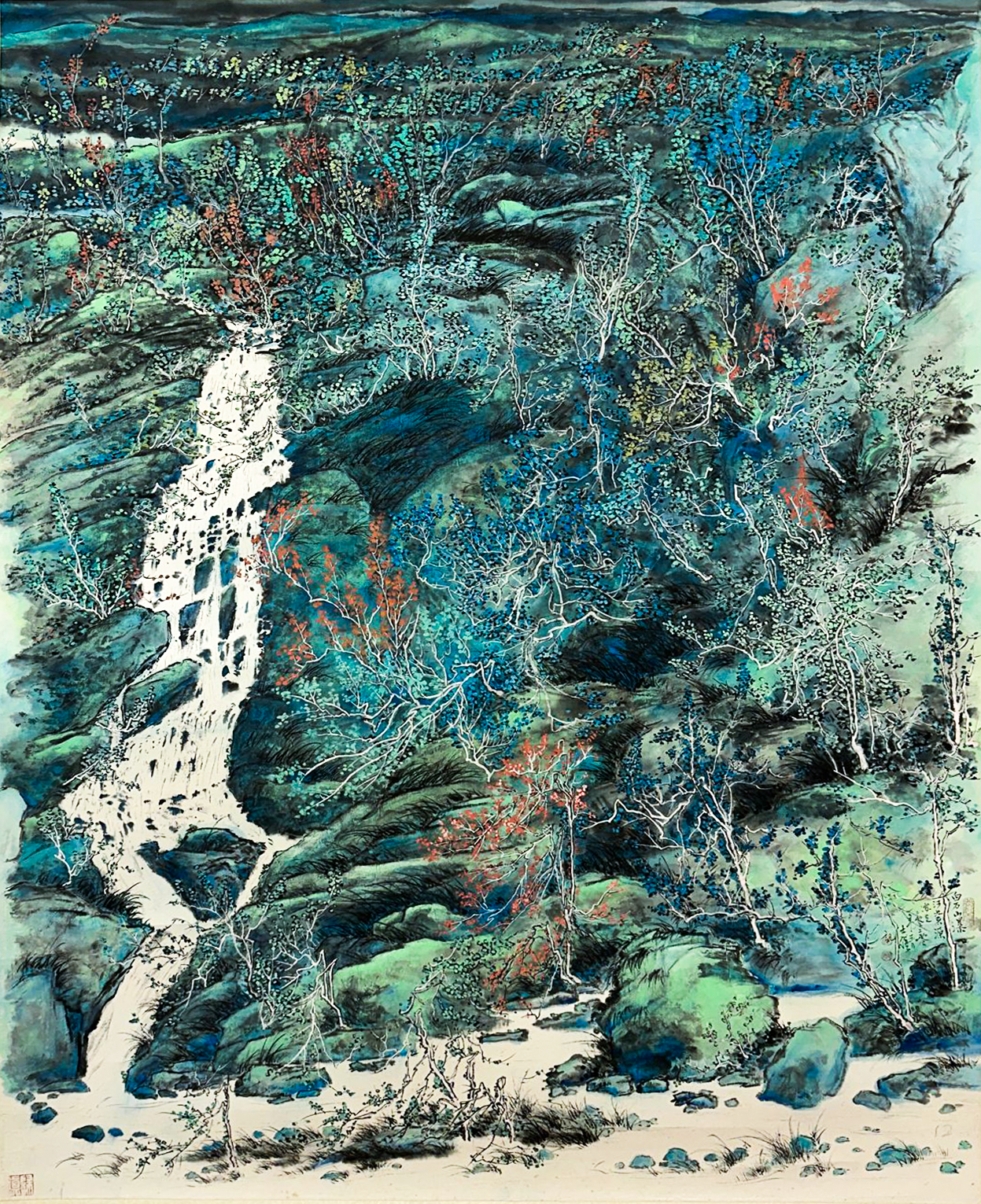
“Waterfall at Baishi Mountain” is a painting executed in the rich, vibrant blue-green style. Although based on a sketch from life, the colors have been entirely stylized—with the exception of the flowing water, which retains the original white space, everything else is arranged by the artist.
The composition employs a rhythm of primary and secondary elements, as well as density and sparseness, infusing the work with poetic sentiment, while the red accents serve to draw the viewer’s gaze to the focal point.
The red radiates outward from the center, gradually fading from intense to pale and becoming sparser as it recedes into the distance; the layers echo one another, creating a continuous flow of energy throughout the composition.
《白石山瀑》是一幅重彩青绿之作。虽为写生,然色彩全然艺术化处理——除流水依样留白外,其余皆由画家自行布陈。以宾主、疏密之节奏入画,寓诗情于其间,复以红色点醒画眼。红色自中心放射而出,由浓渐淡,由密渐疏,层层远去,彼此呼应,气脉贯通。
News

Contact Us
Chen Shi Jin’s work is available for viewing at Chen Shi Jin Gallery, Singapore.
Enquire about Chen Shi Jin’s work or reserve a dedicated time at the gallery to view current works.